Neapolitan pizza has historically been associated with the wood-fired oven, its dome shape and the extremely high temperatures traditionally used in pizzerias in Naples. However, the type of fuel used is not the only factor that determines the quality or authenticity of a Neapolitan pizza.
Professional electric pizza ovens have evolved considerably, and some models are now capable of reproducing the thermal conditions required for this type of baking. High temperatures, a suitable refractory baking deck, strong thermal inertia and even heat distribution now make it possible to produce authentic Neapolitan pizza in an electric oven.
The AVPN itself recognises certain electric ovens for producing Vera Pizza Napoletana. The question is therefore no longer simply whether electric baking can work, but rather which type of electric oven is capable of meeting the specific requirements of Neapolitan pizza.
Does Neapolitan pizza have to be baked in a wood-fired oven?
No. The wood-fired oven is naturally part of the history of Neapolitan pizza, but today it is no longer the only technology capable of providing the conditions required for this type of baking.
Neapolitan pizza is defined above all by its dough, fermentation, hand shaping, cornicione and, in particular, by extremely fast baking at very high temperatures.
The oven must bake the pizza rapidly while keeping the dough soft and light. The base must cook without burning excessively, while the cornicione needs to develop quickly under the intense heat.
What really matters is therefore how the heat is generated, stored and transferred to the pizza, rather than simply whether that heat comes from burning wood.
What temperature is required to bake Neapolitan pizza in an electric oven?
An electric oven designed for Neapolitan pizza must be capable of operating at temperatures significantly higher than those used in many conventional pizza ovens.
Neapolitan pizza is generally baked at around 430 to 500°C, depending on the oven, the dough and the desired result. At these temperatures, a pizza can bake in approximately 60 to 90 seconds.
However, simply reaching 500°C according to the technical specifications is not enough.
An oven may achieve a very high maximum temperature when empty but struggle to maintain it when several pizzas are baked one after another. For professional use, thermal stability is therefore just as important as the maximum temperature stated by the manufacturer.
A professional Neapolitan pizza oven must be able to maintain consistent baking conditions throughout the entire service.
Why is the baking deck so important in an electric Neapolitan pizza oven?
The baking deck comes into direct contact with the pizza and plays a crucial role in the cooking process.
At very high temperatures, a deck that transfers heat too aggressively can burn the underside of the pizza before the cornicione and toppings are properly cooked. Conversely, a deck that loses heat too quickly can lead to progressively longer baking times when pizzas are produced continuously.
This is why some electric ovens specifically developed for Neapolitan pizza use particular refractory materials.
The IZZO Izzonapoletano series, for example, uses biscotto di Sorrento, a material traditionally associated with Neapolitan ovens and particularly well suited to very high-temperature baking.
The quality of the baking deck therefore helps control heat transfer to the dough and reproduce the behaviour required for Neapolitan-style baking.
Why is thermal inertia important?
Thermal inertia refers to the oven’s ability to store heat and retain it over time.
When a cold pizza is placed on the baking deck, it immediately absorbs some of the energy stored in the refractory material. When several pizzas are baked one after another, this demand becomes significant.
A conventional electric oven may reach a high temperature when empty but gradually lose heat from the deck during a busy service.
A true electric Neapolitan pizza oven must therefore have sufficient refractory mass, insulation and power to recover this energy quickly.
This heat recovery capability helps maintain consistent baking conditions between the first pizza and those produced later during peak periods.
Can an electric oven reproduce the heat of a wood-fired oven?
An electric oven obviously does not generate heat in exactly the same way as a wood fire. However, it can reproduce the thermal conditions required to bake Neapolitan pizza.
In a wood-fired oven, the pizza receives heat from the baking deck, radiant heat from the dome and hot air circulating inside the chamber.
Specialised electric ovens use heating elements together with a substantial refractory mass to create a similar balance between top heat and heat from the baking deck.
Some models also allow the power of the top heat and the baking deck to be adjusted independently. This enables the pizzaiolo to fine-tune the oven according to the dough, hydration level and pace of production.
This precise temperature control can even be one of the advantages of electric ovens: once the correct settings have been established, they can be reproduced very consistently from one service to the next.
Does the AVPN recognise electric ovens?
Yes. The Associazione Verace Pizza Napoletana now recognises certain electric ovens that are capable of meeting the baking requirements of Vera Pizza Napoletana.
The relevant equipment must undergo the association’s assessment process before it can appear in its register of approved suppliers.
This development demonstrates that Neapolitan pizza is no longer necessarily tied exclusively to the use of a wood-fired oven.
However, it is important to distinguish between oven approval and pizzeria affiliation. Using an approved oven alone is not enough to obtain Vera Pizza Napoletana recognition. The dough, ingredients, shaping, fermentation, baking method and the pizzaiolo’s expertise must also comply with the association’s requirements.
To better understand this distinction, you can read our article explaining the AVPN and Vera Pizza Napoletana.
Can every electric pizza oven make Neapolitan pizza?
No. This is probably the most important point.
An electric oven capable of reaching 350 or 400°C may be perfectly suitable for many styles of pizza, but it will not necessarily reproduce the extremely fast baking required for Neapolitan pizza.
Even an oven advertised as reaching 500°C is not automatically a good Neapolitan pizza oven.
The design of the baking chamber, the type and thickness of the baking deck, the quantity of refractory materials, insulation, available power and the oven’s ability to recover its temperature after several baking cycles must also be considered.
Neapolitan pizza therefore places much greater demands on an oven than simply reaching a high maximum temperature.
Which electric ovens are suitable for professional Neapolitan pizza baking?
Several Italian manufacturers have developed electric ovens specifically for this type of baking.
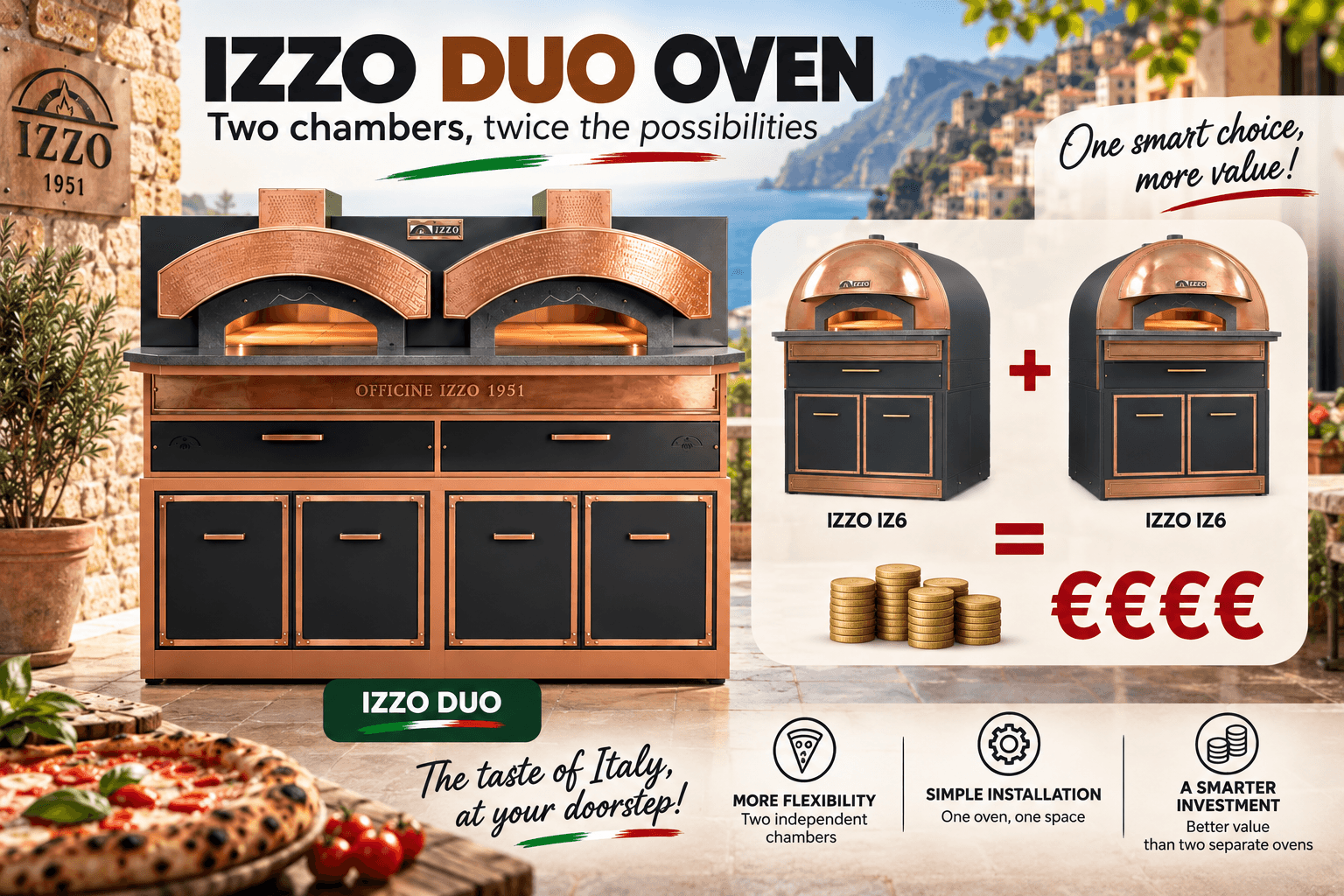
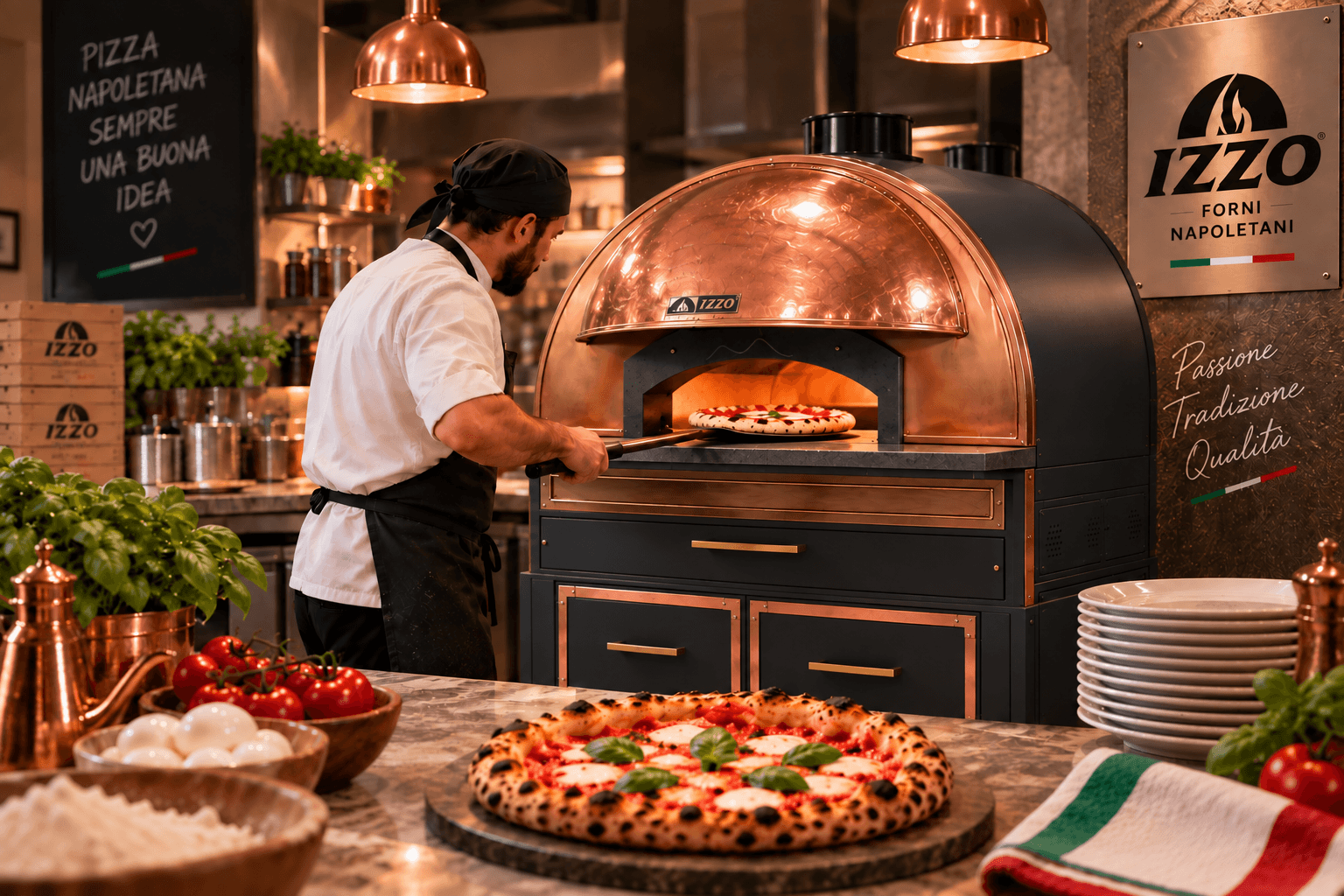
The IZZO Izzonapoletano series was designed around the principles of Neapolitan pizza baking, with a substantial refractory mass and a biscotto di Sorrento baking deck.
The Zanolli AVGVSTO also adopts the traditional appearance of a dome oven while operating entirely on electricity. It can reach 500°C and is available in different capacities, including versions with a rotating deck. You can discover the specifications of the Zanolli AVGVSTO ovens.
The Resto Italia CRATOS is another professional electric oven designed to operate at very high temperatures. Its refractory chamber and Sorrento stone baking deck are suited to the specific demands of Neapolitan pizza baking.
These examples show that genuine professional electric ovens are now available that were developed not simply to bake pizza, but specifically to recreate the conditions required for Neapolitan pizza.
Does pizza taste different when baked in an electric oven?
Wood-fired baking is often associated with the idea of a smoky flavour. However, a Neapolitan pizza remains inside the oven for only a very short time.
The differences between two pizzas therefore also depend on many other factors: the dough, fermentation, flour, ingredients, baking temperature, the behaviour of the baking deck and, of course, the skill of the pizzaiolo.
A properly designed professional electric oven can above all provide very consistent and repeatable baking conditions.
For a pizzeria, this consistency can be particularly useful when several pizzaiolos work with the same equipment or when high volumes need to be produced within a short period of time.
What are the advantages of an electric oven for a Neapolitan pizzeria?
An electric oven allows the pizzaiolo to work without constantly managing a wood fire. There is no need to feed the fire, move embers or continuously compensate for temperature variations caused by combustion.
The pizzaiolo can precisely adjust the oven and reproduce the same settings from one service to the next.
Electric ovens can also be an interesting solution for establishments where using wood is complicated by building constraints, extraction requirements or an urban location.
However, this does not mean that an electric oven is always easier to install. Professional models designed for Neapolitan pizza can require considerable electrical power, and their weight may also require careful consideration of the technical limitations of the premises.
Electric or wood-fired oven: which makes the best Neapolitan pizza?
There is no single answer to this question.
An experienced pizzaiolo using an electric oven genuinely designed for Neapolitan pizza can achieve excellent results. Conversely, simply owning a traditional wood-fired oven does not automatically guarantee a good pizza.
The final quality depends on the entire process: dough preparation, fermentation, shaping, ingredients, temperature, baking management and the experience of the pizzaiolo.
The choice between wood and electricity therefore also depends on the concept of the pizzeria, the available installation and the way the professional wants to work.
Can you really make authentic Neapolitan pizza in an electric oven?
Yes. Modern technology makes it possible to produce authentic Neapolitan pizza in an electric oven, provided that the equipment is genuinely designed to operate at very high temperatures and reproduce the thermal conditions required for this type of baking.
Maximum temperature, however, is not the only criterion. The quality of the baking deck, refractory mass, thermal inertia, insulation, management of the top and bottom heat and the oven’s heat recovery capability are equally important.
The recognition of certain electric ovens by the AVPN also confirms this evolution: Neapolitan tradition can now coexist with modern electric technology.
Ultimately, the most important elements remain the same regardless of the energy source used: properly prepared dough, controlled baking and the skill of the pizzaiolo.
FAQ
Can you make authentic Neapolitan pizza in an electric oven?
Yes. A professional electric oven designed to operate at very high temperatures can reproduce the conditions required to bake authentic Neapolitan pizza.
What temperature should an electric oven reach for Neapolitan pizza?
Neapolitan pizza is generally baked between 430 and 500°C, with a baking time of around 60 to 90 seconds.
Are all electric ovens suitable for Neapolitan pizza?
No. In addition to maximum temperature, you also need to consider the baking deck, thermal inertia, insulation and the oven’s ability to recover heat quickly.
Does the AVPN recognise electric ovens?
Yes. The AVPN recognises certain electric ovens that are capable of meeting the baking requirements for Vera Pizza Napoletana.
Is an electric oven or a wood-fired oven better for Neapolitan pizza?
Both can deliver excellent results if the oven is suitable and used correctly. The final quality depends mainly on the dough, fermentation, temperature and the skill of the pizzaiolo.